Search This Blog

Monday, 11 July 2011

current affairs

  Inside four months I will be as old as my paternal grandfather was when he died. He died suddenly, leaving behind him a successful career, a wife and two children. Having only lived a quarter of a century he had obtained what I in all likelihood never shall. Nevertheless, despite lacking on all three of the salient indicators of maturity, I have recently taken it upon myself to improve in this regard by reading the news on bbc.co.uk/news for a minute or two before I go to bed. Which brings me to the main current of this particular piece: IT SUCKS!

  With the exception of things like “Odd Box” or tales of the amazing, such as a man who managed to leap from a burning building whilst juggling a crocodile, a kitten and an electric fan, all the stories seem to point to one conclusion: That all things are becoming irreparably worse. It’s not to dismiss the tragedy of life: the wars, the murders, the unfortunate occurrences and the natural disasters, it’s simply to highlight that all the information we receive seems to be geared to be in one of the above categories. Every government transaction is detrimental for everyone, every technological development in alternative energy seems unaffordable or yet more detrimental to the environment, which (let’s face it) always seems like a lost cause the way it’s represented in the media.

  It’s quite possible that as a self-confessed pessimist I’m seeing the worst in a good thing, but I get the feeling that all this talk in the so-called news about the ever-increasing levels of depression found in the British population might not just be due to the weather. Every fact based headline seems to be a negative. Putting ‘Faith Healing: Myth or Miracle’ as a title somehow seems to suggest that Myth is the more likely outcome. Every second word seems to be “cut”, “lost” or “did” - and when I say did, it’s usually in the context of “did teachers really think that letting children play with surgical equipment was a good idea?” -  to which the answer was of yes, and then tragedy ensued.

  Another idea about current affairs that particularly grinds my gears is the perpetual assumption among the devoted followers that they somehow “know what’s going on in the world” - a fear of ignorance led me to read it myself, but the second thought eventually hits you like a enraged drunk that you are being informed of selected snippets. The first instance I knew of there being a Kurdish independence war in Turkey was when Top Gear went there for their Christmas special. To know what was happening everywhere in the world, you’d have to read every local newspaper or parish gazette ever written, every week. The advantage of course being that local news has stories about good things in it as well, such as “£20,000 raised for new church roof” or “local shop owner’s wife delighted at giving birth to quintuplets”. Somehow in the transition from local to global though, the bad news tends to be predominant. The shock factor seems to be what sells national papers, which leads us to only receive the bad news about life on mass, with an occasional rocket-skiing panda story at the end to make us think ‘Awwwww, it’s not all that bad’.

  Occasionally however, one does find a story which is entirely devoid of negativity: ‘Owl leaves imprint on Kendall woman’s window’ is an example today which particularly took my fancy. It describes the phenomenon that when a bird flies in to a window it leaves a very artistic window imprint through the depositing of feather powders. Nevertheless (and this might lead one to ask what would make me happy) the fact that this is national news at all seems rather odd. I remember a similar incident when a blue-tit flew in to my window once and left a similar imprint - Yet the event failed to become national news. The only possible source of value in the story is the mirth it might inspire when one images a fully-fledged predator of the night colliding with Anglian’s handiwork.

  Regretfully, I now feel I should begin to argue in the favour of current affairs, but I can’t bring myself to do it. The plain truth of the matter is that if anything newsworthy ever takes place, someone, somewhere will tell you about it. As long as people have the mouths to speak and you have the patience not to spend your life in a cave, YOU WILL BE INFORMED! So it is with a grim satisfaction that I pronounce current affairs 10% on the universal percentage scale, which it only gets because of paper rounds – a valuable source of income for the young, which keeps them from doing drugs out of sheer boredom.... that and hurricane and tornado alertness. But that’s the weather - which is something entirely different... I hope.


Sunday, 19 June 2011

sarah michelle gellar 1997-2003

  Well, there was going to be some kind of argument to this: I started watching Buffy for the first time last week and .... it's not that she's probably not equally gorgeous now, it's just that the series has stopped and ................... ah hell, 110%, nuff said.

Sunday, 5 June 2011

work

  Yeah... guess why I’m writing on this topic. It’s because I have it, yet I don’t want it, yet I do want it, just not the work I have. Not that the work is bad per se, I’m just shit at it. I do apologise dear reader for the use of such profanity – it appears I am using this blog as a sort of a vent for my own insecurity. I’ll be discussing sex next week.... no... no I won’t. But I digress.

  Confucius apparently said “[c]hoose a job you love, and you will never have to work a day in your life”. By contrast, Charlie Sheen said “We're going to shoot one Polaroid per show. I'm going to sign this before it even develops because I know that once it develops with my signature on it, it's worth a fortune. I'll make this a work of magic warlock art”. I’m not overly sure why I quoted that. They’re quite close together in the BrainyQuotes.com dictionary, Charlie Sheen and Confucius. It seemed like a good place to start.


  So. I have taken a job – the first I could find. I make seven pence an hour more than the national minimum wage and I wish somehow to improve my lot further by finding a job with an increased rate of pay and a schedule that adheres to the rules of the 9 to 5 week, which seems to be the standard. Yet I myself have only come close to this supposed ideal once in my life, and even that was an 8.30 til 5 day with an hour long commute either side. But what is my point here? Do I have one? Are these the unfortunate ramblings of a migraine addled man with the vestiges of a bad cold? Perhaps. But perhaps there is more to be found here than this. Perhaps there is a question that must be raised: WHY DO WE WORK AT ALL?

  In the first instance I am prompted to answer that I must needs work in order not to have to return home and live under the aegis of my darling mama and papa: or indeed on the street. But Mr. Brain comes along and offers the alternative of getting in the dole queue and signing up for GIRO, living a life of comfort whilst my food, rent and bills are taken care of by the government and the tax payer. It’s a fine system - the ability to remain alive whilst between work and not place financial strain on any friends or family members is truly one of the greatest achievements of our species. Such a shame that it is then given a bad name by idle scroungers such as myself who view it as a chance to finally build that full-scale model of the pyramids out of matchsticks. It’s a compelling argument, yet there is an answer to this one too.

  I once spent a year living at home, working part-time in a co-op and doing precious little else the rest of the time. There have been few times in my life during which I have been more depressed. Admittedly one of them was working for the summer in a cake factory, but I fear that had much to do with living at home as well. With such an abundance of time on my hands, I didn’t have the first clue how to use it and when one has an abundance of a thing it loses its value. Gold is very shiny admittedly, but it’s also rare. As Prof Bri Cox pointed out in one of his awesome programmes, all the gold discovered by mankind would fit in to three Olympic sized swimming pools, an amount surely representative of the quantity of coca cola that has passed through my alimentary canal. But I digress.

  Work is necessary (aside from the big things like food, clothing, warmth, comfort, freedom etc, etc) in order to make time precious and ensure that when we have time off we spend it only on those things that are necessary and prized, such as family, friends, hobbies and don’t drive ourselves mad trying to match the curtains with the cushions on our living room sofa like some crazed, lonely, middle-class, nineteen-fifties housewife. On the other hand, it is a pain in the ass when you don’t enjoy your job. As such on the universal percentage scale I dub work a solid 76%. I shall now attempt to sleep, so that next week’s blog might be less simplified and more pretentious. 

Sunday, 8 May 2011

migraines


 I realised a few years ago that I seem genetically programmed to develop a new - albeit minor - physical problem every few years. At the age of nine I was diagnosed as partially asthmatic, at 12 I had my first migraine, at 16 I became short sighted, at 18 depressed and at 21 I got hay fever. Now on the scale of human suffering in the world these are, quite clearly, minor problems. I have not been repeatedly beaten against my will, forced in to slavery, used for hideous genetic experiments or been surgically operated on by a man possessed by the Devil who had gouged his own eyes out and then decided to cut open my rib-cage and hang my skin by steel wires like the guy who spoke Latin in Event Horizon (a bloody good film if I recall). Nevertheless, not having much suffering to draw upon for inspiration other than these minor problems, I feel beholden to have good bitch about them once in a while, hence the topic of today’s title.

  For those of you unfamiliar with the concept of the migraine (you lucky, lucky bastards!) people have varying symptoms, lasting for varying lengths of time. In my particular case the initial sign of a migraine is a sudden partial loss of vision, which makes it very hard to see all of somebody’s face, or read anything at all. This area of partial blindness then proceeds to wander all across my field of vision, treading wherever it wishes with lots of flashing lights, before buggering off and leaving me with raging headaches, an aversion to light and loud noise, weakness, nausea (which can often lead to vomiting) and in one case numbness down the length of my left arm. These will usually last me anywhere from forty-five minutes to three hours, leaving noticeable residual effects for about twenty-four hours. 

  To offer an example of how a migraine might affect your vision here is a picture of Scarlett Johansson’s face:
    Beautiful, isn’t it? Who would not want to look at it? ; Its subtle curves, the perfect proportions in harmony with the golden ratio.... But now look at the same image through migraine vision:


  Alternatively you can stand up quickly after you've sat still for a few hours and probably experience something closer to the truth. I guess I just wanted an excuse to look at Scarlett Johansson’s face. It’s an awesome face.

  But I digress.

  Usually the only cure for such a malady is to lie down in a darkened room and drink water. As lame as this may sound however, this has allowed me to listen to many of the dramatised works of Charles Dickens and a lot of Melvin Bragg’s In Our Time (as music just tends to make the headaches worse) providing me with knowledge of the literary history of good and evil and the evolution of the whale. Another advantage is the obvious excuse it provides you for not having to do anything useful, as physical exertion almost always makes you sick. In this hectic day and age, where we are forever pressed to work ourselves to the bone before burning off stress by drinking ourselves in to a coma every weekend, migraines can be argued to be something of a circuit breaker or surge protector, as excessive living (including excessive laziness, stress and alcohol) forever triggers them.

  However, the main disadvantage is that excessive living forever triggers them. Indeed if I even eat too much cheese, chocolate, ice cream, drink too much coffee, or enjoy a night at a house party playing ring of fire, there is a good chance that I will get one the next day. The only real preventative seems to be to lead a healthy life, keeping your body hydrated, eating well, sleeping neither too much nor too little and not drinking to excess... which I suppose is also an advantage. Damn it. I've just disproven my own argument.

  By having reached something of a dichotomy I fear I can go no further. Suffice to say that I consider them a pain in the ass, but they seem to offer some sort of measuring stick for telling me when I need to slow down or speed up. As a result I feel I can’t damn them to Hades, as was my intention. Therefore, on the universal percentage rating, my migraines get 50%. Scarlett Johansson's face naturally gets 100%. 

Tuesday, 3 May 2011

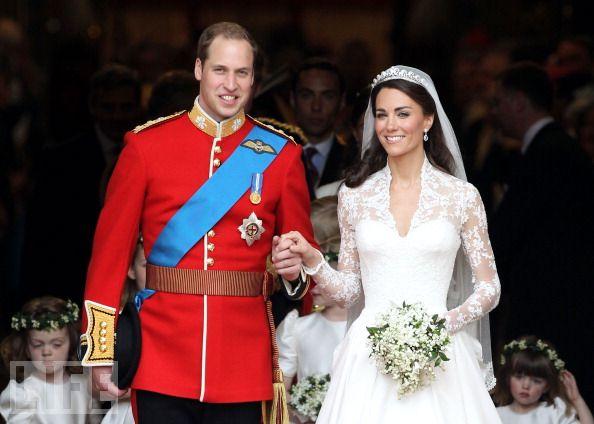
the royal wedding between kate middleton and prince william windsor, and the pizza I made


  That such a momentous occasion has passed in our lifetime is something that we as individuals and lovers of this sceptred isle should be proud of, yet nevertheless when the majority of people are asked the question “where were you when Luke made his pizza”, it is doubtless that thousands will reply that they were attending or watching the royal wedding. This is a point which sadly infuriates me because, as will be obvious to even the most minutely minded of persons, the royal wedding was actually staged to commemorate the making of my pizza. The fact that the making of the pizza went entirely unnoticed by the popular press whilst the wedding has been publicised to manic extremes has become something of a true vexation for me these past four days. Having finally emerged from my depression-induced, alcoholic stupor, I feel it is time that this point were brought to order. 
  The sauce for the topping of the pizza (comprised of garlic, onion, mushroom, red pepper and tomato passata) was in fact the source of the choice of military jacket that Prince William wore on the day of the wedding. The original pinstripe suit with trilby hat and spats shoes was deemed incompatible to the pizza’s colour scheme, and thus at the last minute he was forced to change to his regimental red jacket. The twenty-three buttons on the jacket (the front, the sleeves and of course the shoulders) are symbolic of the twenty-three minutes that the sauce simmered for before I deemed it suitable to be spread on the pizza.

  Whilst it has been publicised that Catherine Middleton’s wedding dress was designed with roses, thistles, daffodils and shamrocks to represent the four territories of the United Kingdom, the truth is that the dress was actually meant to represent the first layer of cheese on the pizza topping. The four plants actually correspond to the four key components of the mixed herbs (marjoram, basil, thyme and oregano) that were added to the cheese to improve the flavour. Also the white colour of the dress was intended to reflect the whiteness of the mild cheddar I chose to use for the first layer of the topping.

  The second layer of the topping was represented at the wedding by the (now) seven core members of the royal family, mimicking the seven pieces of salami I used to create a floral motif on the topping. Just as the seventh (or core) piece of salami sat at the centre of the pizza, so the Queen sits as the central figure of the royal family, whilst the other six (being Phillip, Charles, William, Harry, Camilla and now Catherine) are placed around her. The number of secondary members of the royal family present at the wedding (The other Dukes, Earls, Viscounts and so forth) were limited to correspond exactly to the number of pieces of sweetcorn which also constituted the second layer of the pizza topping. Covering the second layer is the yellow Scottish mature cheddar upon which the colour Queen’s dress and hat were based.

  The Stone of Scone (the symbol of British sovereignty used at all British coronations since 1603) is of course referential to the scone base of the pizza itself. Being a royal wedding, all is conducted under and above the majestic eye of Her Majesty the Queen, so naturally any royal is union sanctified by the sovereignty of the Stone of Scone. The truth of the matter is that Kate Middleton and Prince William’s wedding was designed to mimic the layering system of the pizza: The Queen’s authority (Scottish mature cheddar) presides over the immediate family (salami) and the extended family (sweetcorn) at the union of Catherine Middleton (mild cheddar and mixed herbs) and Prince William (homemade tomato topping) on the sacred foundations of the British Monarchy (the scone base).

  Having cleared up the theory behind the layout of the wedding it seems only fair that I now compare the wedding to the pizza on an even playing field: Whilst the pizza took approximately one and a half hours to make from scratch, the royal wedding had to be planned months in advance. Even on the day itself people from many hundreds of miles away were camped outside Westminster Abbey, waiting nearly twenty-four hours for the ceremony to begin; whereas the pizza cost approximately £5.36 of my own money to buy all the ingredients (with plenty left over to make more), the royal wedding cost millions of pounds in taxpayers’ contributions – many more times the cost of the pizza itself; though the pizza was both delicious and extremely filling (I could have split it in to two meals, but it was so nice I couldn’t resist it) I found the royal wedding to be virtually inedible, with the percentage of uneatable matter present far outweighing the proportion of eatable matter (though I imagine there are many who would happily have a go at the new Duchess of Cambridge). Ultimately as a meal, the royal wedding remains vastly inferior to the pizza, fulfilling none of the requirements one would expect from food.


  As a result of its taste, texture and fulfilment of all food requirements, the pizza scores an impressive universal percentage rating of 92%.


 Sadly having fulfilled none of the requirements necessary to satisfy my hunger, having taken all of the press attention from the true event of celebration and having never acknowledged it even once during the entirety of the ceremony, the wedding receives considerably less in the rankings. However, it regains marks for being a fitting representation to the majesty of my cooking skills and by being considerably lower in fat: 33%. 

Thursday, 28 April 2011

apathy


  Yes, it's that sin everybody loves to hate, the one which a large mammal with long claws and a inclination for eating leaves was named after (I won't name it 'cos it's in the title, it's obvious innit). The very act of writing about it, tells me that I should simply write something like "meh" and leave it at that. Sadly I've already gone to the trouble of taking the pictures for this post and if you google it there are about fifteen hundred de-motivational posters which follow a similar line.

  So. Apathy. As a sin, it does appear relatively unique among the famous seven. Apparently Carl Jung said something to the effect that it is the worst sin, as all others require motivation of some kind. Certainly if you're going to act on lust, anger or greed there is a requisite amount of work that must be done first. A rapist can never be accused of lacking commitment, or an axe-murderer of being afraid of getting his hands dirty.

  In all fairness however, the other sins usually seem to have direct negative consequences for others, whilst apathites usually can only directly do harm to themselves alone. Whilst a thief deprives another person of a beloved or valuable item (or in the case of one house I lived in - underwear) a lazy person can only usually bore another person to the extent that they then avoid the former. In certain cases, dependents might be let down by the apathite, but the beauty of being overly apathetic is that you usually don't have too many dependents. It's just too much effort.

  Certainly there does seem to be a case for negligence when it comes to apathy. The fact, for instance, that Sony are only now trying to build a better security system after the account and card details of 770 million people were stolen, suggests that apathy at certain levels is quiet disruptive at a large scale. However, one can argue that apathy is only a negative consequence when mixed with other sins, in this case the supposed greed of the web-thieves themselves (or maybe they were doing it for a good cause. I'm just spit-balling here).

  Also, in its favour is the idea that it is a rather refined, luxurious sin. In the course of natural life for say Stone Age humankind, any of the other sins is allowed and even advantageous: Anger is useful for braining antelope with rocks, with gluttony you'll eat well and have a better chance at surviving the winter, greed means that you hoard everything you need for a rainy day, jealousy makes you nick the bronze tools that the other guys have made and learn to make them yourself, lust assists procreation and pride convinces you at the very least that you are doing the right thing by killing your rivals. Apathy is the only one which has no place in natural selection, because it offers no advantages, and as such would have tended to be weeded out (except in the case of the sloth - and that's only because it can digest leaves and hang from trees).

  As such it seems that apathy is therefore a more recently, and arguably highly evolved human sin. It can only be allowed in a stable, advanced society where our needs are regularly met, as otherwise it would be killed off. It is a luxury in the purest sense, and to my mind quite an achievement. It is for this reason therefore that I dub apathy on the universal percentage scale: 89%

Monday, 25 April 2011

the milky way

  Having recently become a devotee of the Professor Brian Cox religion (yes, I caught on a bit late) I have decided to attribute some of my time to writing a post on our home galaxy. Though this stretches the definition of the word "world" a little, I figure that since we can only ever really comprehend our own galaxy conceptually - as the act of looking at it is a bit like trying to look at your own face without a mirror - I'd take a gamble on this one.

  In it's favour, the Milky Way houses our solar system and some 200 - 400 billion stars and whatever those individual stars entail - a fact which is arguably awesome in the original sense of the word. However, to my mind, this is possibly the fullest extent of the benefits of the Milky Way as everything after that (and it is a lot in all fairness) seems to verge on the negative.

 The first fact is that there is a supermassive blackhole at the center of it. Though this may somehow be the reason that the galaxy turns at all, it's a bit like God decided in all his worldly wisdom to put a giant, perpetually flushing toilet in the middle of an all-you-can-eat floating buffet/pool party - it seems neither safe nor hygienic.

  Secondly is the notion that whilst the majority of galaxies are flying apart from each other, the Andromeda galaxy and our own are on a direct collision course, effective in about three billion years or so. Now I hardly expect to be alive by this point and apparently the Sun will have swollen and blistered the face of the Earth, but one hopes that some clever people will have managed to scrape a living, floating around Proxima Centauri. Imagine then that all those clever developments become effectively null and void when a vast sweep of galactic arm comes tearing through the neighborhood, undoing all the good work. It's a little disconcerting.

  To my mind, the Milky Way is the best party around but turning up means you're dead: The punch is spiked with cyanide, the pineapple and cheese on sticks is explosive and all the strippers are trained assassins.

  Overall I rate the Milky Way on the universal percentage scale as being a 42%


(all photos nicked from google)